

Solving Hospital Wall Time: A Collaborative Approach for EMS and Emergency Departments
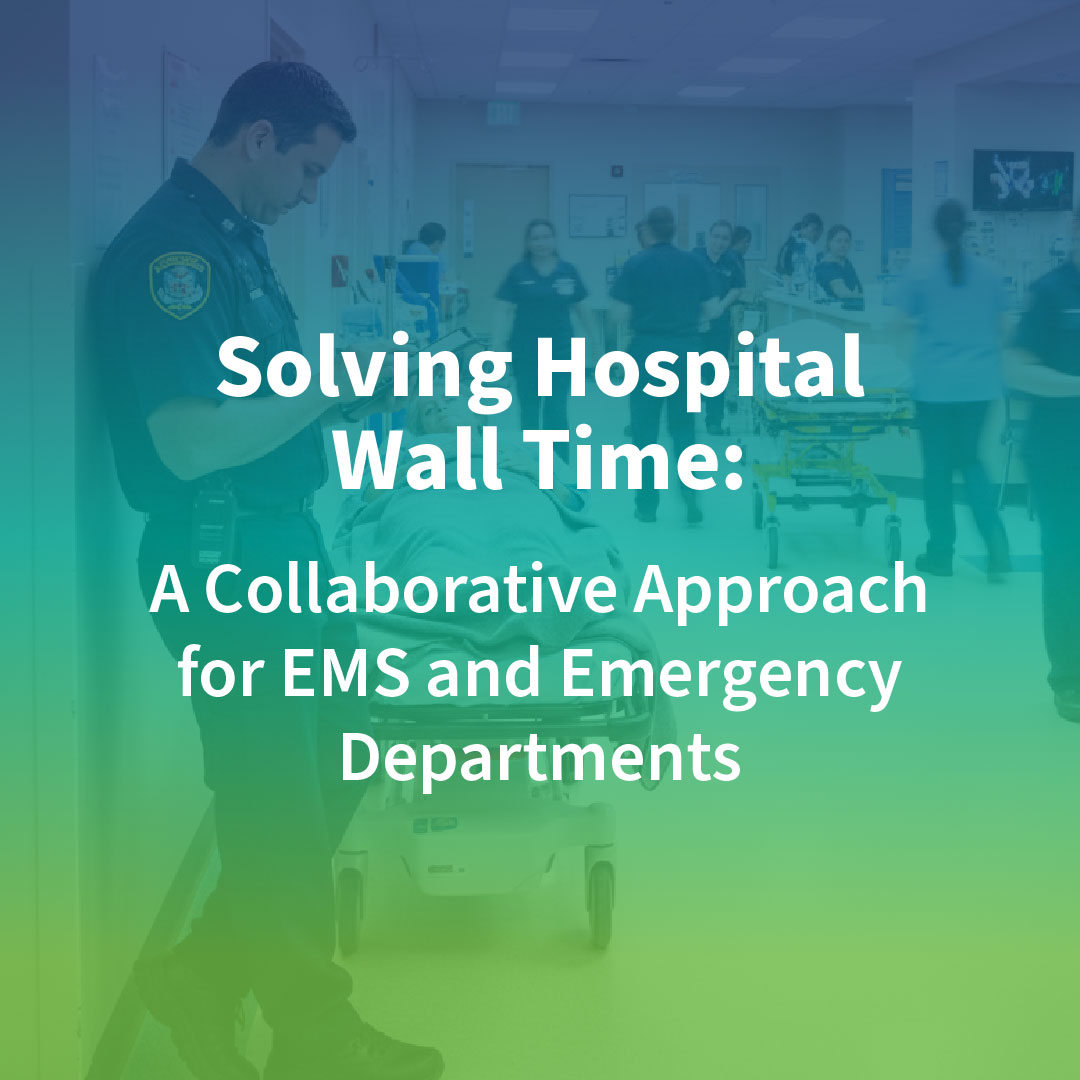
If you work in EMS today, you’ve likely spent more hours than you’d like waiting on the wall of a crowded emergency department. Hospital wall time refers to the period when EMS crews are required to wait in emergency departments before transferring patient care. What used to be an occasional delay has grown into a nationwide challenge, stretching resources thin and testing both provider morale and response system capacity.
Ambulance offload delays leave crews stuck, hospitals overwhelmed, and patients waiting. When an ambulance is holding the wall, it isn’t available to respond to the next emergency. For communities where every minute matters, that’s not a small problem.
This growing strain has been widely covered across the industry and the media, with EMS leaders calling attention to the operational and clinical impact of wall time delays. And while many systems are doing everything they can with the capacity they have, one theme keeps emerging: communication between EMS and hospitals needs to be faster, clearer, and more unified.
Why Wall Time Persists
Today’s emergency departments face high volumes, staffing challenges, and limited space. EMS crews arrive ready to transfer care, but they enter a system already operating at its maximum load. The result is delays that can last 20, 40, sometimes 60 minutes or more. During that time, dispatch may not know crews are tied up, and hospital leaders may not realize ambulances are stacking in their hallways.
Both teams want the same thing: safe care and rapid patient flow. The missing piece is real-time shared awareness.
A Collaborative Path Forward
Reducing wall time requires something simple but often underestimated: communication at the moment a delay is happening. Phone calls and after-action reports help, but they aren’t timely enough in fast-moving environments. EMS providers need a way to alert leaders quickly and professionally when delays occur, and hospitals need a clear window into what units are waiting and why.
That’s the idea behind WallComm™, Handtevy’s collaborative communication tool for EMS and emergency departments. Included in all subscriptions, WallComm creates an instant, secure connection between EMS leadership and hospital partners the moment a crew is delayed on the wall. No complex setup. No extra cost. Just shared visibility when it matters most.
How WallComm Supports Teams
- GPS-Verified Time Stamps
Arrival and departure times are automatically logged, giving systems real data without burdening crews. - Instant Communication
A live chat channel opens between EMS and hospital leadership so teams can coordinate care and clearance in real time. - Event Insights
Post-event summaries help identify trends, support quality improvement, and strengthen hospital-EMS collaboration.
This isn’t about assigning blame. It’s about transparency, teamwork, and doing what’s right for patients and communities.
WallComm was created to strengthen communication between prehospital and hospital teams. When used thoughtfully, it supports a smoother transition of care, enhances patient experience, and promotes a culture of shared responsibility and collaboration.
Built With Hospital Partnerships in Mind
Before activating WallComm, EMS agencies are encouraged to meet with hospital leaders and walk through expectations together. The shared goal is to use timely information to support flow, not create friction. WallComm is built with flexibility, allowing hospitals and EMS leaders to pause notifications when unavailable, review enrolled users, and keep communication efficient and respectful.
Field crews receive simple guidance on when to activate WallComm and how to keep messages factual and professional. It’s real-world, workable, and designed to serve both sides of the patient care pathway.
Getting Crews Back in Service Faster
When we improve awareness, we improve action. Faster communication means faster support, faster solutions, and faster return-to-service times. WallComm gives EMS leaders and hospitals the insight they need to make decisions in real time, for the benefit of patients and the community.
Because keeping ambulances available isn’t just an operational need. It’s a patient-safety priority.
Want to Enable WallComm™ ?
Agencies can turn the feature on in the Feature Hub inside Handtevy Mobile. Hospital partners can join easily and start receiving secure notifications right away. If you’d like help getting started or want to view a demo, the Handtevy team is here to support your rollout.
Looking to roll out WallComm at your agency or hospital? Our WallComm Best Practices Guide walks through setup tips, communication expectations, and how to use real-time alerts to support collaboration instead of tension. It’s a quick read designed to help EMS and ED teams get aligned, stay professional, and get crews back in service faster.